Live Virtual Masterclass — Limited Seats Available

Tuesday, September 29 · 7:00 PM Eastern
Live Masterclass + Q&A
What Every Cancer Has In Common — And the Breakthrough 50 Years In The Making
A molecular biologist spent fifty years on one question: what do all cancers share? Most women never get a real answer. In this masterclass, you will.
Tuesday, Sept 29
7:00 PM Eastern
Free to Attend

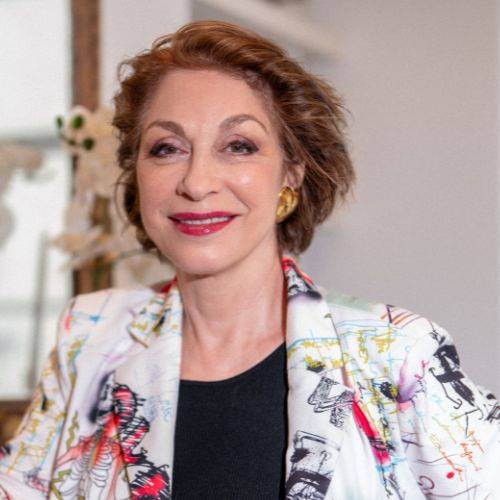
Hosted by Dr. Michael Karlfeldt
With a special guest sharing five decades of lab work into what all cancers have in common.
The Live Event Has Ended.
Seats for the live masterclass are limited. Register below and we’ll send you a private link to join.
Can’t make it live? Register anyway — we’ll email you a link to watch the replay the day after, provided it records properly.
Thank you for your interest in joining our live masterclass. The live session has now ended.
Keep an eye on your inbox for new events.
Breast. Ovarian. Pancreatic. Colorectal. Brain. And more than a hundred others...
A hundred separate cancers — or one question asked a hundred times?
Medicine sorts cancer by the organ it started in, for good practical reasons. Mirko Beljanski spent his career on the opposite question — and everything that followed, including the extracts, came out of the answer he settled on.
Who This is For
4 Different Starting Points. One Question Underneath.
Women arrive at this subject from very different places. The reason they end up in the same room is that the biology being discussed doesn’t sort itself by diagnosis.
You're in Treatment Right Now
You’re in the middle of it. You want to understand what’s actually happening in your body and what questions you should be bringing to your next appointment.
You're Recovering and Watching
The scans are clear and everyone told you to move on. The question never quite leaves, and nobody has explained to you why it lingers.
It Runs In Your Family
A mother, a sister, an aunt. You’ve done the math on your own odds and you’d like to understand more than a few statistics about them.
Your Diagnosis Is Less Common
Pancreatic, colorectal, lung, something rarer. Women’s health messaging tends to stop at breast and ovarian, and yours went missing from the conversation.
Those four women are usually handed four different conversations. The research you’ll hear about treated them as one. Not just breast cancer. Not just during treatment. Before, during, and after.
The Session
What You'll Learn In This Masterclass:
One hour on what cancers appear to share, fifty years of laboratory research aimed at finding the answer, then a live Q&A with the experts.
01
Why Cancer Gets Treated Organ by Organ
Where that convention came from, what it gets right, and what it can obscure when a patient is trying to understand her own situation.
02
Cancer Stem Cells, Explained
The subpopulation hypothesis in plain language: what makes these cells different, why they are hard to reach, why they matter to anyone thinking about recurrence, and what remains genuinely debated about them.
03
Selectivity: The Thing You Can Watch
One of these extracts glows under UV light, which means you can watch where it goes instead of taking anyone’s word for it. What the cell studies were set up to show, what was seen — and the difference between what happens in a dish and what that does or doesn’t mean for a person.
04
Beljanski's Answer and What It Cost Him
The DNA destabilization thesis in his own terms: what he claimed, what he set out to demonstrate, how the two plants were chosen because of it rather than before it — and why a career spent on the question rather than the organ kept him outside the mainstream.
05
What The Lab Work Actually Shows
Cell-line studies and animal models involving Pao pereira, Rauwolfia vomitoria and green tea extracts — across breast, ovarian, pancreatic, colorectal and prostate lines — presented as what they are. Preclinical research is not a human clinical trial, and you’ll hear that said out loud.
06
What to Do With This Information
How to read a preclinical study without over-reading it, what questions to bring to your doctor or oncologist, and why anything you take belongs in that conversation — whether you are in treatment or nowhere near it. Then live Q&A.
Straight Talk
Three Things Before You Attend...
No one on this call will claim that anything fully prevents cancer, stops it from returning, or treats it. Those claims can’t be made, and they won’t be.
The research you’ll see is Maison Beljanski’s real, published evidence of fity years of laboratory work. You’ll see and hear that said out loud.
If you’re in active treatment: anything you take alongside treatment can interact with chemotherapy, radiation and hormone therapy. Nothing discussed here should be started or stopped without your oncology team knowing.
And yes — there’s a special offer at the end. You’ll see it coming.
Your Hosts
Who You'll Be Learning From
Dr. Michael Karlfeldt, ND, PhD
Host · Integrative Cancer Care
Dr. Karlfeldt has spent 38 years working with people facing cancer — during treatment, in the years after it, and with those who came to him before any diagnosis at all. He founded The Karlfeldt Center, hosts Conquering Cancer, and his practice combines advanced natural therapies with conventional oncology rather than competing with it.
His role here is to press on the science, translate it, and be clear about where the evidence stops.
Sylvie Beljanski
Founder · Beljanski Foundation
A French lawyer who left the law to carry on her family’s research, Sylvie founded and presides over The Beljanski Foundation, which funds work on natural approaches to cancer, and is CEO of Maison Beljanski. Her book Winning The War On Cancer was an Amazon bestseller.
Her role here is the history and the laboratory work: what Mirko set out to investigate, what has been published since, and what the studies were designed to test — and what they were not.
Registrations Closes When Seats Fill
Limited Spots Available for the Live Q&A
Live TONIGHT (Tuesday, September 29) at 7:00 PM Eastern. Free to attend.
Please read: This masterclass is educational and is not medical advice. Dietary supplements are not intended to diagnose, treat, cure, or prevent any disease, and these statements have not been evaluated by the Food and Drug Administration. No claim is made that any product prevents cancer, prevents recurrence, treats cancer, reduces cancer risk, or affects the course of any disease. Research spanning multiple cancer cell lines in the laboratory does not establish efficacy in any cancer type in people. Research discussed includes laboratory (in vitro) and animal studies; results in cell lines and animal models do not predict results in people, and no human clinical trial outcomes are claimed. Botanical supplements can interact with chemotherapy, radiation, hormone therapy, and prescription medication — talk with your oncologist or physician before starting, stopping, or changing anything, particularly during active treatment. Individual experiences vary. This presentation does not replace individualized oncology care.
© 2026 Conquering Cancer. All rights reserved.